
Two nearly identical white jars sit on the top shelf of my soap cabinet, and confusing them once cost me an entire batch of what should have been olive oil bars. Learning the real differences between sodium hydroxide and potassium hydroxide turned out to be the moment my soap making grew up — from following recipes to actually understanding them.
- My Hands-On Experience with Both Soap-Making Lyes
- What This Craft Really Entails
- Essential Materials and Tools
- Key Techniques and Skills
- Skill Level and Time Investment
- Advantages and Challenges
- Real Project Applications
- The Learning Experience
- Comparison with Similar Crafts
- Common Questions from Fellow Crafters
- My Personal Results and Insights
- Final Thoughts and My Recommendation
My Hands-On Experience with Both Soap-Making Lyes
For my first few years I soaped exclusively with sodium hydroxide, the way most bar makers do, and treated the KOH jar at the supply shop as some exotic cousin I’d never need. Then a farmers-market customer asked whether I made liquid hand soap, and my honest answer — “not yet” — sent me into the potassium side of the craft.
My very first attempt produced a paste that looked right but diluted into a cloudy mess with a greasy film on top, because nobody had told me commercial KOH isn’t fully pure. Three batches later I finally held a jar of clear, amber liquid soap up to the window light, and I’ve kept both alkalis in rotation ever since.
Understanding what each one does, and why, is genuinely the fork in the road for every soaper who wants to move beyond a single product type.

What This Craft Really Entails
Both chemicals go by the folk name “lye,” which causes endless beginner confusion. Sodium hydroxide (NaOH, historically called caustic soda) and potassium hydroxide (KOH, caustic potash) are strong alkalis that drive saponification — the reaction that turns fats and oils into soap plus glycerin. Without one of them, you don’t have soap; you have a bowl of scented oil.
The historical order actually runs backwards from what most people assume. Potassium soap came first: for centuries, households leached wood ashes with water to make potash lye and boiled it with fats into soft, jelly-like soap. Hard bar soap only became common once sodium hydroxide could be produced reliably. So when you stir a pot of KOH soap paste, you’re doing something closer to your great-great-grandmother’s method than any modern bar maker is.
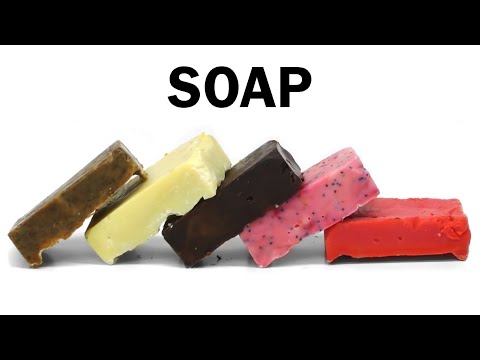
The core difference lives in one atom. NaOH produces sodium salts of fatty acids, which pack tightly into a hard, long-lasting solid. KOH produces potassium salts, which are far more water-soluble — especially in warm water — so the finished soap stays soft, pastes easily, and dilutes into liquid. Same oils, same process, completely different product, all because sodium and potassium ions crystallize differently.
Ever wondered why one white pellet gives you a brick and the other gives you syrup? That solubility gap is the entire answer, and it dictates the division of labor: NaOH for cold and hot process bars, KOH for liquid soap, shower gels, whipped soaps, and soap pastes. Blend the two and you enter dual-lye territory — cream soaps and traditional shaving soaps that need a stable, dense lather use both alkalis in careful ratios.
There are quieter differences too. KOH molecules are heavier (about 56 grams per mole versus 40 for NaOH), so every recipe needs roughly 1.4 times more KOH by weight to saponify the same oils. KOH also costs noticeably more — potassium chloride feedstock is pricier than plain table salt, and bulk KOH can run two to three times the price of NaOH. And both dissolve in water with a violent release of heat, spiking well past 90°C in a concentrated solution.
Who needs this knowledge? Any soaper stepping beyond basic bars. Bar-only makers can live happily with NaOH alone. But the moment liquid soap, cream soap, or shaving soap enters your plans, KOH literacy becomes non-negotiable — and so does the discipline of never treating the two as interchangeable.
Essential Materials and Tools
Working with either alkali uses the same core kit, with a few KOH-specific additions worth flagging.
| Item Category | Specifications |
|---|---|
| Sodium hydroxide | Beads or flakes, 97–99% purity, sold as “pure lye.” Around $5–8 per pound. Makes hard bar soap via cold or hot process. |
| Potassium hydroxide | Flakes, typically only 90% pure (the rest is water and carbonates). Roughly $8–15 per pound. Makes liquid soap paste, cream soap, soft soap. |
| Digital scale | Accuracy to 1 gram or better; lye is always weighed, never measured by volume. |
| Soap calculator | One that supports both alkalis AND lets you enter KOH purity. Separate SAP values per oil per alkali are mandatory. |
| Mixing vessels | Stainless steel or #5 polypropylene only — no aluminum, no glass. A dedicated, clearly labeled lye pitcher for each alkali prevents mix-ups. |
| Safety gear | Goggles, nitrile gloves, long sleeves; ventilation or outdoor mixing for both alkalis. |
| Slow cooker | For KOH work: liquid soap paste cooks 2–3 hours in a crockpot at low heat. |
| Oils for KOH | High-oleic oils (olive, high-oleic sunflower) for clear liquid soap; coconut capped near 25% if clarity matters. |
The purity correction is the single most useful KOH fact I can hand you. Commercial KOH is usually only about 90% pure, so enter that purity into your soap calculator — or weigh out the calculator’s figure divided by 0.9. If a calculator assumes pure KOH, your recipe silently gains a hidden 10% superfat, and that excess oil is exactly what separates out as greasy scum after dilution. My cloudy first batches were this mistake and nothing else.
Key Techniques and Skills
These are the skills that working with both alkalis has drilled into me, from foundational to specialized:
- Reading SAP values correctly — every oil has separate saponification numbers for NaOH and KOH, and calculators handle the conversion
- Mixing lye solution safely — sprinkling the alkali into cold water slowly, stirring, letting fumes vent for a few minutes
- Correcting for KOH purity before weighing anything
- Cold process with NaOH — blending oils and lye water to trace, molding, and curing 4–6 weeks
- Hot process paste cooking with KOH — stirring the batter through its strange taffy and translucent-vaseline stages until it holds together
- The clarity test — dissolving a small knob of paste in warm water; a clear solution means saponification is complete, cloudiness means keep cooking
- Diluting paste to finished liquid soap gradually, since over-dilution can’t be undone without evaporation
- Superfatting appropriately — 5% is standard for bars, but liquid soap wants 2–3% or the excess fat separates
- Sequestering or thickening liquid soap with salt solution where the fatty-acid profile allows
- Building dual-lye recipes — calculating each alkali’s share separately for cream and shaving soaps
- Labeling and storing both alkalis in airtight containers, since each pulls moisture (and KOH pulls carbon dioxide) from the air
The rule that overrides every technique above: always add lye to water, never water to lye. Pouring water onto a pile of either alkali can flash-boil the first drops and spit caustic solution upward at your face. Both chemicals cause serious burns in raw form; goggles are non-negotiable, and vinegar is not a rinse for skin contact — flush with plenty of plain running water instead.
Skill Level and Time Investment
The two alkalis have genuinely different learning curves, and it’s fair to know that before choosing a first project.
| Skill Level | Time Investment | Key Milestones |
|---|---|---|
| NaOH beginner | 1 afternoon per batch + 4–6 week cure | First cold process bars; safe lye handling; understanding trace |
| NaOH comfortable | 5–10 batches over 2–3 months | Custom recipes via calculator, reliable hardness and lather |
| KOH beginner | 1 long day: 2–3 hour paste cook plus dilution | First liquid soap; purity correction; passing the clarity test |
| KOH comfortable | 4–6 paste batches | Clear soap on the first dilution; controlled thickness; sequestered formulas |
| Dual-lye work | 6–12 months into the craft | Cream soaps and shaving soaps with stable, dense lather |
Honestly? Bars forgive more. A slightly imperfect NaOH batch still cures into usable soap, while a KOH paste with wrong numbers announces the failure immediately as cloud and scum. That instant feedback is frustrating on day one and educational forever after.
Advantages and Challenges
Each alkali earns its shelf space differently. Here’s the honest ledger from my notebook and from years of forum reading.
What each does brilliantly:
- NaOH bars last months in the shower and travel well — hardness is the whole point of sodium
- NaOH is cheap, available in hardware stores, and forgiving of small recipe wobbles
- Cold process with NaOH allows swirls, layers, and decorative work no liquid soap can match
- KOH liquid soap is ready to use days after making — no six-week cure
- One KOH paste batch dilutes into months of hand soap; a 1 kg paste stretches to roughly 3–4 liters
- KOH soap rinses cleaner in cool and hard water thanks to its higher solubility
- Potassium soaps excel at cutting heavy grease, which is why degreasers lean on KOH
- Dual-lye mastery opens shaving soap — a premium product few hobbyists attempt
Where each one bites:
- KOH costs two to three times more per effective batch once the 1.4x weight factor is included
- That 90% purity trap ruins first liquid batches constantly
- KOH paste cooking is a hot, sticky, arm-tiring process compared to a 15-minute cold process pour
- NaOH’s cure time tests every beginner’s patience
- Neither can be swapped into the other’s recipes without full recalculation
- Both are hazardous raw chemicals that demand gear, ventilation, and respect
Real Project Applications
What do these two alkalis actually produce on my workbench across a year? The NaOH column is the classic lineup: olive-and-coconut everyday bars, oatmeal-honey hot process, tallow laundry soap, and holiday gift loaves. A standard 1 kg oil batch takes about 135–140 g of NaOH depending on the oil blend and yields ten generous bars after cure.
The KOH column is smaller but mighty. My kitchen-sink liquid soap starts as a 700 g oil paste — mostly olive with a modest coconut share for lather — cooked in the slow cooker until a spoonful dissolves crystal-clear in warm water. Diluted and bottled, that single Saturday session fills our dispensers for four months or more.
The project that convinced me KOH was worth the trouble: a citrus kitchen soap, diluted to a pourable amber liquid and finished with a splash of saline solution to thicken it. Friends who tried it asked for refills before the first bottles were empty, and the material cost per 250 ml bottle worked out under a dollar. Liquid soap makes the humblest gift feel store-bought in the best way.
Dual-lye projects sit at the top of the difficulty ladder and reward the climb. A shaving soap built around stearic-rich fats with a KOH-dominant blend (many makers land near 60–80% KOH against NaOH) produces the dense, slick, long-lasting lather that bar soap simply cannot. Cream soaps — whipped, jarred, spoonable — use similar dual chemistry at different ratios.
Practical household applications round things out. Soft KOH paste diluted thick becomes a dish soap concentrate; diluted thin, a gentle hand wash; blended with extra water and sprayed, a garden-safe insecticidal soap. Which other single jar of chemical converts into that many finished products?
And for makers who sell: offering bars, liquid soap, and a shaving puck from the same oil pantry — just by switching the alkali — is the cheapest product-line expansion in the craft.

The Learning Experience
Beginners almost universally start with NaOH bars, and that’s the right call: the process is shorter, the recipes are everywhere, and the failure modes are gentle. KOH usually enters the picture in year one or two, when curiosity or a customer request pushes someone toward liquid soap.
The classic early mistakes cluster around three traps: substituting one lye for the other gram-for-gram, ignoring KOH purity, and giving up on a paste cook too early because the taffy stage looks alarming. Sound familiar? Every liquid-soap forum thread contains all three.
Here’s a question worth sitting with before your first KOH batch: is your recipe calculator actually asking you for KOH purity? If you can’t find that field, the calculator is quietly assuming a purity your flakes don’t have — and your first lesson in potassium soap will be scheduled by the software, not by you.
My own breakthrough came from a humbling substitution error, back before the two jars earned separate shelves. A batch of bar soap made with KOH weighed out at NaOH numbers never hardened — two weeks in the mold and it was still sticky putty I could dent with a fingertip. Rebatching it in my old stainless pot salvaged the oils, and the lesson stuck harder than the soap ever did.
For learning resources, the technical liquid-soap articles at Classic Bells are the gold standard for KOH math, and the Soapmaking Forum’s liquid soap section answers the cloudiness questions faster than any book. The satisfaction curve is real: the day a paste sample dissolves perfectly clear on the first test feels like passing a chemistry practical you designed yourself.
Comparison with Similar Crafts
The choice of alkali effectively defines four sibling crafts under the soap-making roof. Here’s how they compare in practice.
| Aspect | NaOH Bar Soap | KOH Liquid Soap | Dual-Lye Cream/Shaving Soap | Melt and Pour |
|---|---|---|---|---|
| Alkali handling | Yes — full safety gear | Yes — full safety gear, more of it by weight | Yes — two solutions per batch | None; base is pre-saponified |
| Time to usable soap | 4–6 weeks cure | Days (after dilution settles) | 1–2 weeks rest | Same day |
| Cost per batch | Lowest per bar | Higher — pricier alkali, more of it | Highest — both alkalis plus premium fats | Moderate; base is prepaid chemistry |
| Design freedom | Swirls, layers, embeds | Color and scent only | Texture and scent | Wide — clear base, embeds, layers |
| Difficulty | Moderate | Moderate-high; unforgiving math | High | Easy, kid-friendly |
Common Questions from Fellow Crafters
Q: Can I just swap KOH into my favorite bar recipe, or NaOH into a liquid recipe?
A: No — and this is the hill every soaper eventually meets. Never substitute one lye for the other gram-for-gram; each oil has different saponification values for NaOH and KOH, so every swap requires a full recalculation. Run the recipe through a calculator in the correct alkali mode and you’re fine.
Q: Which one should a total beginner buy first?
A: Sodium hydroxide, almost without exception. Bar soap has the gentler learning curve, the cheaper ingredients, and the bigger library of beginner recipes. Come back for KOH once trace, superfat, and lye safety feel routine.
Q: Why did my liquid soap turn out cloudy?
A: Three usual suspects: unfinished saponification (cook the paste longer and re-test), too much superfat or uncorrected KOH purity (excess free oil clouds and separates), or an oil blend heavy in saturated fats — coconut above roughly a quarter of the recipe trades clarity for lather.
Q: Is one alkali safer to handle than the other?
A: Not meaningfully. Both are corrosive, both burn skin, both heat water violently on contact. Treat them identically: goggles, gloves, ventilation, and the lye-into-water rule every single time.
Q: Do the finished soaps differ in harshness or pH?
A: At equal concentrations the two alkalis produce essentially the same pH, and properly made soap from either is skin-safe once saponification completes. Mildness comes from your oil choices and superfat, not from which hydroxide you used.
Q: What ratio do shaving-soap makers use?
A: Most published artisan formulas run KOH-dominant — commonly somewhere between 60:40 and 80:20 KOH to NaOH — because potassium delivers the quick, dense lather while a sodium fraction firms the puck. Every maker guards their exact split, and small ratio shifts genuinely change the lather.
Q: Can I make my own KOH from wood ash like the old-timers?
A: You can leach potash lye from hardwood ash, and it will make soft soap — but its strength is wildly inconsistent, so precise modern recipes and superfats are impossible. Fascinating heritage project; frustrating production method. Buy the flakes for anything you plan to use on skin.
My Personal Results and Insights
A few years of running both alkalis side by side has filled a notebook page worth summarizing.
| Project Type | Outcome |
|---|---|
| NaOH bar batches | Backbone of my output — dozens of batches yearly at roughly $0.80–1.20 per bar in materials |
| First three KOH batches | All cloudy from the purity mistake; two rescued by longer cooking, one composted |
| KOH liquid soap since correction | Every batch clear on first dilution test; one Saturday cook covers ~4 months of household hand soap |
| Accidental KOH-in-bar substitution | 1 batch of permanent putty; oils salvaged via rebatch, lesson permanent |
| Dual-lye shaving soap | 3 attempts to reach a lather I’d sell; friends’ razors have opinions and shared them freely |
| Cost tracking | Liquid soap runs ~2.5x the alkali cost of equivalent bars, yet still under half the price of store refills |
The insight that surprised me most: keeping both alkalis stocked changed how I think about oils. The same jug of olive oil is now potentially a bar, a bottle, or a shaving puck — the lye choice, not the fat, decides the destiny.
Final Thoughts and My Recommendation
Sodium hydroxide versus potassium hydroxide isn’t really a contest — it’s a fork, and which branch you take depends entirely on what you want to hold in your hand at the end. For hard, beautiful, long-lasting bars, NaOH is the only answer and a wonderfully approachable one. For liquid soap, soft soap, and the lush lather of shaving creams, KOH is irreplaceable, provided you respect its math: the 1.4x weight factor, the 90% purity correction, and the lower superfat ceiling.
My honest recommendation by experience level: beginners should master NaOH bars first and not feel one bit behind for it. Intermediate soapers with a few dozen bar batches behind them will find KOH liquid soap a genuinely thrilling next mountain — harder math, faster feedback, and a product the whole household uses daily. Dual-lye work is the reward waiting after both are comfortable.
Whatever you choose, keep the two jars labeled loudly and shelved apart. The chemistry forgives almost everything in this craft except confusing sodium for potassium — and as my two weeks of putty-soap proved, that particular lesson only needs teaching once. Both alkalis have earned permanent places in my studio, and I’d hand either one to a careful crafter without hesitation.


My biggest challenge with KOH has been the dilution phase. Every single time I try to get a clear amber liquid, I end up with a cloudy white mess that looks more like dishwater than professional soap. I use distilled water exclusively and keep the heat around 80 degrees, but the clarity just never stays. Is it possible the purity level of my chemicals is the culprit instead of my dilution technique? I buy my flakes from a local chemical supplier that does not post the exact percentage, so that might be the weak link. I really want to get that perfect transparent finish so I can start selling these at the holiday craft fair next month.
Regarding your clarity issues, the culprit is often the presence of stearic acid or high levels of unsaturated fats that haven’t fully reacted. If you are using a recipe with very high percentages of olive oil, the soap will often remain cloudy unless you maintain a consistent temperature during the dilution phase. If your KOH source isn’t labeled as 97-99 percent purity, you are likely dealing with impurities like potassium carbonate, which does not saponify fats. I recommend switching to a supplier that provides a certificate of analysis. Also, test your paste by dissolving a small amount in boiling distilled water; if it stays cloudy, your ratio of KOH to oils is likely off, and you may need to add a small amount of extra lye solution to finish the saponification of the remaining free fats.
That explains so much. I definitely suspected the local supply was hiding something, but I didn’t know about the potassium carbonate issue. I will source higher purity flakes and re-test my paste. Thanks for the breakdown.
Glad that helped. Just keep an eye on your dilution water volume as well. Using too much water initially can make it harder to spot if the paste is fully dissolved, so try starting with a 1:1 ratio of paste to water before adding more.
Potassium hydroxide definitely requires a different headspace than standard bar soaps. I learned this the hard way after three ruined batches when I first started moving into liquid hand washes. The logic of using 1.4 times more mass for KOH really shifted my perspective on the math behind the process. Most people forget how heavy the molecules are, and if you miscalculate that ratio, you end up with a separation that no amount of stirring can fix. I keep my KOH sealed in a secondary plastic tub with a desiccant pack because those flakes pull moisture from the air so fast it ruins the precision of my scale measurements. Using a 0.01g resolution scale changed everything for me. Now I can reliably hit my target lye concentration without guessing if the humidity in my laundry room is messing with the weight of my dry ingredients. It is definitely not a project for a hurried afternoon.