The first pair of sneakers I painted with ordinary acrylic lasted three weeks of daily wear before the toe box began to crack along the natural flex lines. That failure pushed me to learn the difference between craft paint and paint formulated for flexible surfaces, and the next pair still looks intact after a full season.
My hands-on experience with acrylic paint on shoes
Acrylic paint can work on shoes when the surface is properly prepared, the paint is kept thin, and a flexible sealer is applied. Regular heavy-body acrylic alone is too rigid for the constant bending of footwear. Leather-specific acrylics or standard acrylic mixed with fabric medium give far better results.
Early attempts without deglazing left paint sitting on the factory finish and peeling within days. Once I removed the gloss and built thin layers in the direction of flex, adhesion improved dramatically.
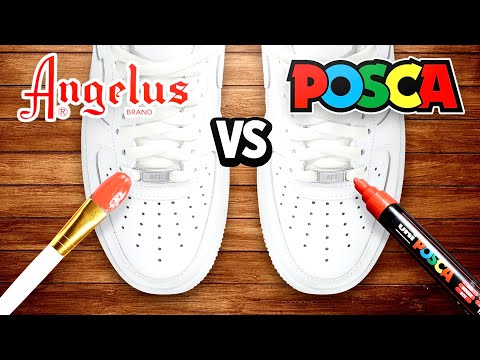
Dedicated leather acrylics such as Angelus are formulated to remain flexible after drying, while ordinary craft acrylic becomes brittle unless modified with a fabric medium.
The method suits canvas sneakers, leather uppers, and many synthetics, provided the right preparation and sealer are used.
What this craft really entails
Painting shoes with acrylic means applying flexible acrylic color to footwear surfaces so the design survives walking, flexing, and light moisture. It is also called custom sneaker painting or shoe customization. The practice grew from both craft and professional restoration work on leather and canvas.
Core skills are surface deglazing, thin-layer application that follows flex lines, and thorough sealing. Beginners can succeed on canvas with fabric medium. Intermediate painters handle leather with specialized paints. Advanced work includes midsole painting and multi-layer designs that still bend cleanly.
Compared with fabric paint made for clothing, shoe work demands higher abrasion resistance. Compared with ordinary acrylic on canvas, the constant movement of a shoe requires extra flexibility.
Have you ever watched a freshly painted toe box crack the first time you walked across a parking lot?
That failure appears when the paint film is too thick or lacks a flexible binder. Another common problem is paint peeling from glossy factory finishes that were never deglazed. A third issue is water softening unsealed acrylic during rain or cleaning.
Never apply thick coats of unmodified craft acrylic to high-flex areas; the rigid film will crack within days of regular wear.
The craft suits anyone willing to prepare the surface carefully and wait for full cure before wearing the shoes. It does not require drawing skill, yet it still demands patience with drying times and sealers.
Essential materials and tools
| Item Category | Specifications |
|---|---|
| Primary paints | Leather acrylic (Angelus or equivalent) for leather/vinyl; standard acrylic mixed 2:1 with fabric medium for canvas |
| Mediums and sealers | Fabric medium for flexibility; acrylic finisher (matte or satin) in 2-3 thin coats |
| Surface prep | Isopropyl alcohol or leather preparer/deglazer; fine sandpaper if needed |
| Tools | Soft synthetic brushes, foam applicators, masking tape, clean rags |
| Optional | Airbrush for even coverage, heat-setting tools for fabric medium |
| Quality markers | High pigment load, labeled flexibility, water-resistant when sealed |
| Approximate costs | Leather paint set $20-40, fabric medium $8-12, finisher $10-15 |
Coverage varies with shoe size and number of coats. The paint coverage calculator helps estimate volume once surface area is known.
Loading calculator...
I always remove the laces and mask the soles before any paint touches the upper.
Three to five thin coats of flexible acrylic, each dried fully, produce better adhesion than one or two heavy coats.
Key techniques and skills
- Thorough cleaning and degreasing of the entire surface before any paint
- Deglazing leather or glossy synthetics until the shine is completely gone
- Mixing fabric medium into standard acrylic at roughly 1:2 for canvas shoes
- Applying paint in the direction of natural flex lines rather than against them
- Building opacity with multiple thin layers instead of one thick coat
- Allowing 15-30 minutes between coats and at least 24 hours before flexing
- Sealing with a flexible acrylic finisher in two or three light coats
- Heat-setting fabric-medium mixtures when the product instructions require it
- Masking midsoles and hardware to keep edges clean
- Testing flexibility by gently bending the shoe after full cure
- Spot-cleaning finished shoes rather than machine washing
- Reapplying sealer after heavy wear if the surface begins to dull
The reliable order is prep, thin color layers, full dry, then protective sealer.
Common mistakes and how to avoid them
- Skipping the deglaze step on leather. Remove every trace of factory finish or the paint will sit on top and peel.
- Applying thick coats. Keep each layer thin enough that the underlying surface still shows faintly on the first pass.
- Painting across flex lines instead of with them. Observe how the shoe bends and follow that direction.
- Wearing the shoes before full cure. Wait a minimum of 24 hours, preferably 48-72 hours, before the first walk.
- Using an inflexible sealer. Choose an acrylic finisher labeled for leather or fabric rather than a hard craft varnish.
- Machine washing painted shoes. Spot clean only with a damp cloth and mild soap.
Never force a rigid craft acrylic film across the toe box without fabric medium or a leather-specific formula; cracking is almost certain within the first week of wear.

Practical steps for a durable painted pair
Clean the shoes thoroughly and deglaze any glossy leather. Mix fabric medium into acrylic for canvas or use leather paint straight for leather. Apply the first thin coat following the flex direction and let it dry completely. Build three to five coats until opacity is reached. After the final color coat has cured at least 24 hours, apply two light coats of flexible acrylic finisher. Allow another full day before wearing.
Fresh paint feels slightly tacky and smells of mild acrylic; once sealed and cured the surface is smooth, flexible, and nearly odorless. The finished film should bend with the shoe rather than resist it.
A properly sealed pair of canvas sneakers painted with acrylic and fabric medium has survived daily city walking for more than eight months without significant cracking.
Drying and curing intervals are critical for adhesion. The acrylic drying time estimator helps plan realistic wait times once layer thickness is known.
Loading calculator...
Thin layers that move with the shoe outlast thick layers that fight the flex every time.
Final thoughts
Acrylic paint is good for shoes when it is chosen or modified for flexibility, applied in thin coats that follow the natural bend, and protected with a proper sealer. Anyone willing to deglaze carefully and wait for full cure can produce wearable results. I reach for leather-specific acrylics or fabric-medium mixtures for any pair that will see regular walking, and I treat ordinary craft acrylic as a short-term experiment only.