
I still remember the first batch of soap I ruined; it was a lumpy, separating mess that taught me more than any success ever could. Over years of blending oils and lye, I’ve learned that mistakes in soap making aren’t failures, but rather the chemistry whispering its secrets to us.
- My Journey with Soap Making
- What This Craft Really Entails
- Essential Materials and Tools
- Key Techniques and Skills
- Skill Level and Time Investment
- Advantages and Challenges
- Real Project Applications
- The Learning Experience
- Comparison with Similar Crafts
- Common Questions from Fellow Crafters
- My Personal Results and Insights
- Final Thoughts and My Recommendation
My Journey with Soap Making
My fascination with soap making began not out of necessity, but out of curiosity about what exactly I was putting on my skin. I started with a simple olive oil recipe, terrified of the lye, wearing goggles that were far too big for my face. I remember standing in my kitchen, holding my breath as I poured the caustic solution, wondering if I was crazy to be doing this at home.
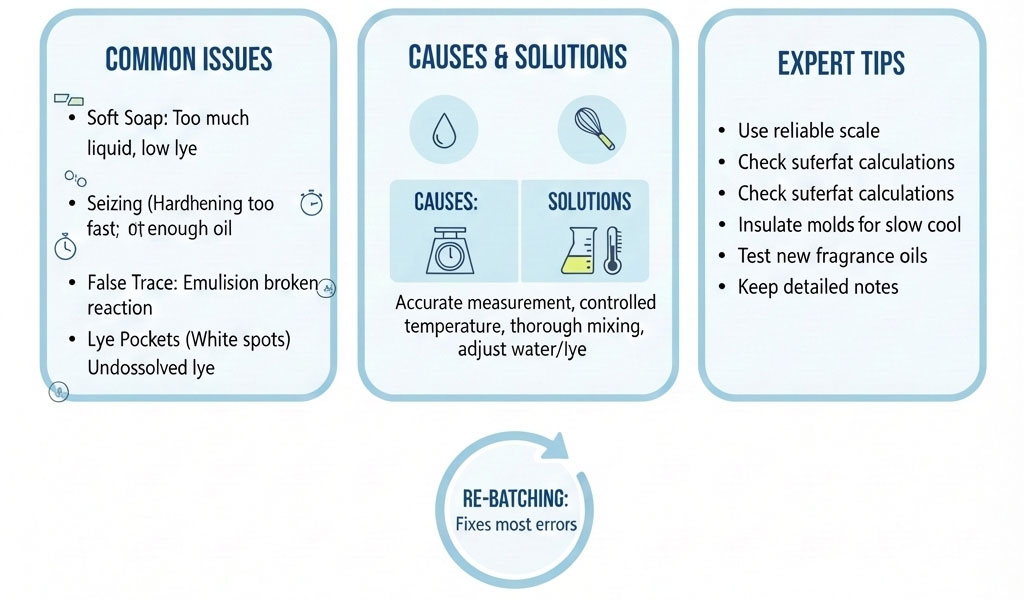
There was a specific moment that defined my path as a crafter. I was attempting a complex swirl technique with a floral fragrance oil I hadn’t tested before. Within seconds of adding the scent, the batter turned into a solid brick in my pot—a phenomenon known as seizing.
It felt like a disaster at the time, seeing perfectly good oils wasted, but that failed batch forced me to learn about hot process recovery and the importance of fragrance flashpoints.
That incident shifted my perspective entirely. I stopped looking for perfect aesthetic results immediately and started respecting the science behind the reaction. Now, when a batch misbehaves, I don’t panic; I grab my spatula and analyze the variable that changed.

What This Craft Really Entails
Soap making, specifically the Cold Process method, is the perfect marriage of precise chemistry and artistic expression. It involves emulsifying oils (acids) with a sodium hydroxide solution (base) to create a salt, which we know as soap. This chemical reaction is called saponification.
While many assume it’s just mixing things in a pot, the reality is far more technical. You become part chemist, part baker, and part artist. You must understand fatty acid profiles to predict whether a bar will be hard, bubbly, or conditioning.
Ever wondered why your batter suddenly turned into what looks like curdled milk just moments after mixing?
This craft is suited for those who are meticulous and patient. It is not for the “eyeball it” style of cook; it requires exact measurements. If you enjoy baking macarons or soufflés where precision is key, you will likely thrive here.
It compares closely to baking, but with higher stakes regarding safety. Like baking, once the reaction starts, you cannot pause it. You must move with the rhythm of the batter. It is quite different from knitting or painting, where you can put the project down for days at a time.
Essential Materials and Tools
Using the right tools is non-negotiable for safety and success. You do not need the most expensive gear to start, but you do need equipment dedicated solely to soap making.
| Item Category | Specifications |
|---|---|
| Safety Gear | Nitrile gloves, safety goggles (not just glasses), long sleeves. |
| Digital Scale | Must measure to the gram or 0.1 oz. Kitchen scales are standard. |
| Immersion Blender | Stainless steel shaft is preferred. Do not use a hand mixer or whisk. |
| Containers | Stainless steel or #5 Polypropylene (PP) plastic. No aluminum. |
| Molds | Silicone loaf molds or wood molds with freezer paper lining. |
Key Techniques and Skills
Mastering soap making requires building a repertoire of skills that help you control the batter. These are the techniques I rely on daily:
- Lye Safety Handling: Mixing sodium hydroxide properly to avoid fumes and burns.
- Trace Recognition: Identifying when the oils and lye have permanently emulsified.
- Temperature Control: Knowing when to soap cool (room temp) versus warm to affect design.
- Oil Formulation: Balancing hard oils (palm, coconut) with soft oils (olive, almond).
- Fragrance Testing: predicting how essential oils or fragrance oils accelerate trace.
- Curing: Managing airflow and humidity for the 4-6 week drying period.
- Ph Testing: Using the “zap test” or strips to ensure soap is safe to use.
- Beveling and Planing: Cleaning up rough edges for a professional finish.
- Troubleshooting Separation: recovering a batch that has split in the mold.
Always remember that lye reacts aggressively with certain metals. Never use aluminum pots or utensils, as the lye will eat through the metal and create dangerous hydrogen gas.
Skill Level and Time Investment
Soap making has a steep initial learning curve due to safety protocols, but once you understand the rhythm, it becomes intuitive. Here is a realistic breakdown of the journey.
| Skill Level | Time Investment | Key Milestones |
|---|---|---|
| Beginner | 2-3 months | Mastering lye safety, understanding trace, making a solid plain bar. |
| Intermediate | 6-12 months | Working with colors, simple swirls, understanding water discounting. |
| Advanced | 1+ years | Formulating original recipes, intricate designs, fluid dynamics control. |
Advantages and Challenges
Like any craft, soap making has its highs and lows. The community is incredibly supportive, but the physics of the materials can be unforgiving.
- Control over Ingredients: You know exactly what touches your skin, ideal for allergy sufferers.
- Creative Outlet: The design possibilities with colors and textures are infinite.
- Cost Effectiveness: A loaf produces 8-10 bars, which is cheaper long-term than luxury artisanal soap.
- Therapeutic Rhythm: The process of blending to trace is incredibly meditative and focusing.
- Practicality: It is a consumable art; you aren’t left with clutter, and everyone needs soap.
- Science Education: You gain a deep understanding of chemistry and solubility.
- Safety Risks: working with caustic materials requires constant vigilance and no distractions.
- Curing Time: You cannot use your creation immediately; the 4-6 week wait is difficult.
- Upfront Cost: buying oils in bulk and essential oils can be expensive initially.
- Failed Batches: Sometimes a batch is unsalvageable, resulting in wasted money and materials.
Real Project Applications
One of my favorite applications of this craft is creating “Salt Bars.” These are coconut-heavy soaps containing fine sea salt. They are rock hard, last forever, and exfoliate beautifully. I often make these as spa gifts because they look like polished stones.
Another practical project is laundry soap. I collect all my “ugly” soap scraps and failed batches (as long as they are lye-safe), grate them down, and mix them with washing soda. It is zero-waste and cleans clothes exceptionally well without synthetic detergents.
Many crafters use “confetti soap” techniques to save money. This involves chopping up an old batch into small cubes and suspending them in a new batch of contrasting colored fresh batter.
I once made a batch specifically for a friend’s wedding favors. We designed the scent profile to match her bouquet. Making 150 small bars took a weekend, but the personalization was something you simply couldn’t buy in a store. It added a deeply personal touch to her event.
The Learning Experience
Most beginners start with a mix of excitement and terror. The first time you mix lye, your heart races. This is normal and healthy. The most common mistake I see is rushing the temperature cooling process.

Books are great, but video tutorials are superior for this craft because you need to see what “trace” looks like in motion. It is difficult to describe the viscosity of thin pudding in text, but seeing it drip from a stick blender makes it click instantly.
Keep a dedicated notebook for every single batch. Record temperatures, humidity, and fragrance behavior. This data is your most valuable tool for troubleshooting future problems.
The satisfaction comes when you cut the loaf. It is like opening a present every time because you never know exactly how the inside swirls formed until the blade passes through.
Comparison with Similar Crafts
Soap making often gets grouped with candle making and cosmetics, but the technical requirements vary significantly.
| Aspect | Soap Making (CP) | Candle Making | Lotion Making | |
|---|---|---|---|---|
| Chemistry | High (Chemical Reaction) | Low (Physical change) | High (Emulsion stability) | |
| Danger Level | Moderate (Corrosive lye) | Moderate (Fire hazard) | Low (Preservative focus) | |
| Wait Time | Weeks (Curing) | Days (Curing) | Immediate use | |
| Cleanup | Easy (It’s soap!) | Difficult (Waxy mess) | Greasy/Oily |
Common Questions from Fellow Crafters
Q: Why did my soap crack down the middle?
A: This is usually caused by overheating. If the soap gets too hot during the gel phase, it expands and cracks. Try putting your mold in the fridge next time.
Q: Can I use food coloring to dye my soap?
A: Generally, no. Food coloring is not stable in the high pH of raw soap and will often morph into ugly browns or fade completely. Use micas or oxides instead.
Q: Is it safe to use plastic containers for mixing lye?
A: Only if the plastic is rated #5 (Polypropylene). Other plastics can melt or become brittle and shatter under the high heat lye generates.
Q: My soap has strange orange spots. What are they?
A: We call this DOS (Dreaded Orange Spots). It indicates your oils have gone rancid. The soap is safe to use but will smell bad. Check the expiration dates on your oils.
Q: How do I know if my soap is lye heavy?
A: If the soap is brittle and crumbly, or if it “zaps” you (feels like a 9-volt battery) when you touch your tongue to it, it has too much lye. If a batch is lye heavy, it is unsafe to use on skin and should be re-batched or discarded.
Q: Why does my soap have white streaks inside?
A: These are likely “glycerin rivers.” They happen when using titanium dioxide with too much water or heat. They are purely cosmetic and don’t affect performance.
My Personal Results and Insights
After tracking hundreds of batches, I’ve gathered some data on what actually works versus what is just theory.
| Project Type | Outcome |
|---|---|
| Standard Batches | 95% Success rate. Failures usually due to old fragrance oils. |
| Cost Savings | Approximately $0.80 per bar vs $6.00 retail for similar quality. |
| Skill Timeline | Took 40 batches to feel completely confident with any swirl design. |
| Gift Success | Highest appreciated handmade gift I make, requested yearly. |
“Soap making is like cooking, but you can’t lick the spoon.” — A common saying in our community that perfectly captures the danger and delight of the process.

Final Thoughts and My Recommendation
Soap making is a craft that demands respect. It is not a hobby to pick up if you are looking for instant gratification or if you cannot work undisturbed. The chemicals involved require a serious mindset. However, the reward of using a bar of soap that you formulated specifically for your skin needs is unmatched.
I highly recommend this for anyone who loves science, cooking, or practical arts. It is perfect for the intermediate crafter who wants to graduate from melt-and-pour bases to true artisan creation. The ability to control ingredients is empowering, especially in a world of synthetic detergents.
While the initial cost of tools and the fear of lye can be barriers, they are surmountable. Start with a simple, fragrance-free batch. Precision is not optional in soap making, so invest in a good scale before you buy anything else. Once you wash your hands with your first successful bar, store-bought soap will never feel the same again.
Just started soap making and I’m on a tight budget! Found a great deal on lye at the local hardware store for $3.50/lb. Anyone know where to get cheap oils?
Regarding cheap oils, I’ve found that ordering in bulk from online suppliers can be cost-effective. However, be sure to research the supplier and read reviews to ensure you’re getting high-quality oils. Also, consider using a mixture of affordable oils like olive and coconut oil to create a balanced soap recipe.
I love combining soap making with other crafts, like embedding crochet flowers or adding resin decorations. Has anyone tried mixing soap making with candle making? I’m thinking of creating a layered soap-candle hybrid
The chemistry behind soap making is fascinating! I’ve been experimenting with different oil blends and lye concentrations to optimize the saponification reaction. Has anyone else noticed that using a higher percentage of coconut oil can increase the hardness of the soap, but also makes it more prone to seizing?
That’s an interesting point about coconut oil and seizing. Research suggests that the high lauric acid content in coconut oil can contribute to a faster saponification reaction, increasing the risk of seizing. To mitigate this, you can try adding a small amount of castor oil or other oils with high ricinoleic acid content to slow down the reaction. I’d love to hear more about your experiments and results!