
I stumbled into the world of castile soap shampoo making about five years ago when my scalp started rebelling against every commercial product I tried. What began as a desperate attempt to find relief turned into a genuine passion for natural hair care crafting that transformed not just my hair, but my entire approach to beauty products.
- My Journey with Castile Soap Shampoo Making
- What This Craft Really Entails
- Essential Materials and Tools
- Key Techniques and Skills
- Skill Level and Time Investment
- Advantages and Challenges
- Real Project Applications
- The Learning Experience
- Comparison with Similar Crafts
- Common Questions from Fellow Crafters
- My Personal Results and Insights
- Final Thoughts and My Recommendation
My Journey with Castile Soap Shampoo Making
My first attempt at making castile soap shampoo was, honestly, a disaster. I mixed undiluted soap straight into my hair and ended up with what felt like straw attached to my head. But that failure taught me everything I needed to know about proper dilution, pH balance, and the importance of following up with an acidic rinse. Over the years, I’ve refined my technique through countless batches, learning from both successes and spectacular failures.

What This Craft Really Entails
Making shampoo with castile soap is the art of transforming a versatile vegetable oil-based soap into a gentle, natural hair cleanser. Castile soap originated in the Castile region of Spain, traditionally made from pure olive oil, though modern versions often incorporate coconut, hemp, or jojoba oils. This craft sits at the intersection of traditional soap making and modern DIY beauty formulation.
The technique involves carefully diluting concentrated castile soap with water or herbal teas, then customizing the blend with carrier oils, essential oils, and other natural ingredients to suit your specific hair type. Unlike conventional shampoo making which requires surfactants and preservatives, this method leverages the existing cleansing power of saponified plant oils.
What makes this craft unique is its simplicity combined with infinite customization possibilities. You’re working with a pre-made soap base, so you bypass the complex process of soap making from scratch, yet you maintain complete control over every other ingredient that touches your hair.
The most critical aspect to understand is that castile soap has a high pH level of around nine to ten, while your hair and scalp prefer an acidic environment of four point five to five point five. This pH difference means you absolutely must follow up with an acidic conditioning rinse to close your hair cuticles and restore balance.
This craft is best suited for intermediate crafters who have some experience with DIY beauty products and understand basic concepts like pH balance, proper dilution, and ingredient interaction. Beginners can certainly start here, but they need patience and realistic expectations about the transition period their hair will go through.
Ever wondered why this method differs so dramatically from making regular shampoo? The key is in the soap itself. Traditional shampoos use synthetic detergents called surfactants that are specifically formulated for hair’s pH. Castile soap, being true soap, works through saponification of oils rather than synthetic cleansing agents, giving you a completely different washing experience.
Compared to other natural hair care methods like baking soda washes or apple cider vinegar-only routines, castile soap shampoo offers stronger cleansing power without being as harsh as commercial shampoos. It’s like finding the middle ground between completely giving up shampoo and using chemical-laden products.

Essential Materials and Tools
| Item Category | Specifications |
|---|---|
| Liquid Castile Soap | Half cup per batch, organic preferred, brands like Dr. Bronner’s recommended, available in scented or unscented varieties, approximate cost fifteen to twenty dollars for thirty-two ounce bottle |
| Base Liquid | Half cup distilled water, filtered water, or strongly brewed herbal tea like chamomile or peppermint, completely cooled before use |
| Essential Oils | Ten to twenty drops total, options include rosemary for hair growth, peppermint for stimulation, lavender for soothing, tea tree for dandruff, cost varies five to fifteen dollars per bottle |
| Carrier Oils | Half to one teaspoon jojoba oil for moisture, castor oil for hair growth, or sweet almond oil for nourishment, optional but recommended for dry hair |
| Acidic Rinse | Apple cider vinegar or fresh lemon juice, one part acid to one part water for conditioning rinse, stored separately from shampoo |
| Storage Containers | Eight to sixteen ounce bottles with pump or squeeze top, glass preferred for longevity, separate bottle for acidic rinse |
| Tools | Funnel for easy pouring, measuring cups and spoons, mixing bowl or jar, labels for tracking recipes and dates |
| Optional Additives | Xanthan gum for thickening, vitamin E oil as preservative extends shelf life, honey for moisturizing, aloe vera gel for soothing |
Key Techniques and Skills
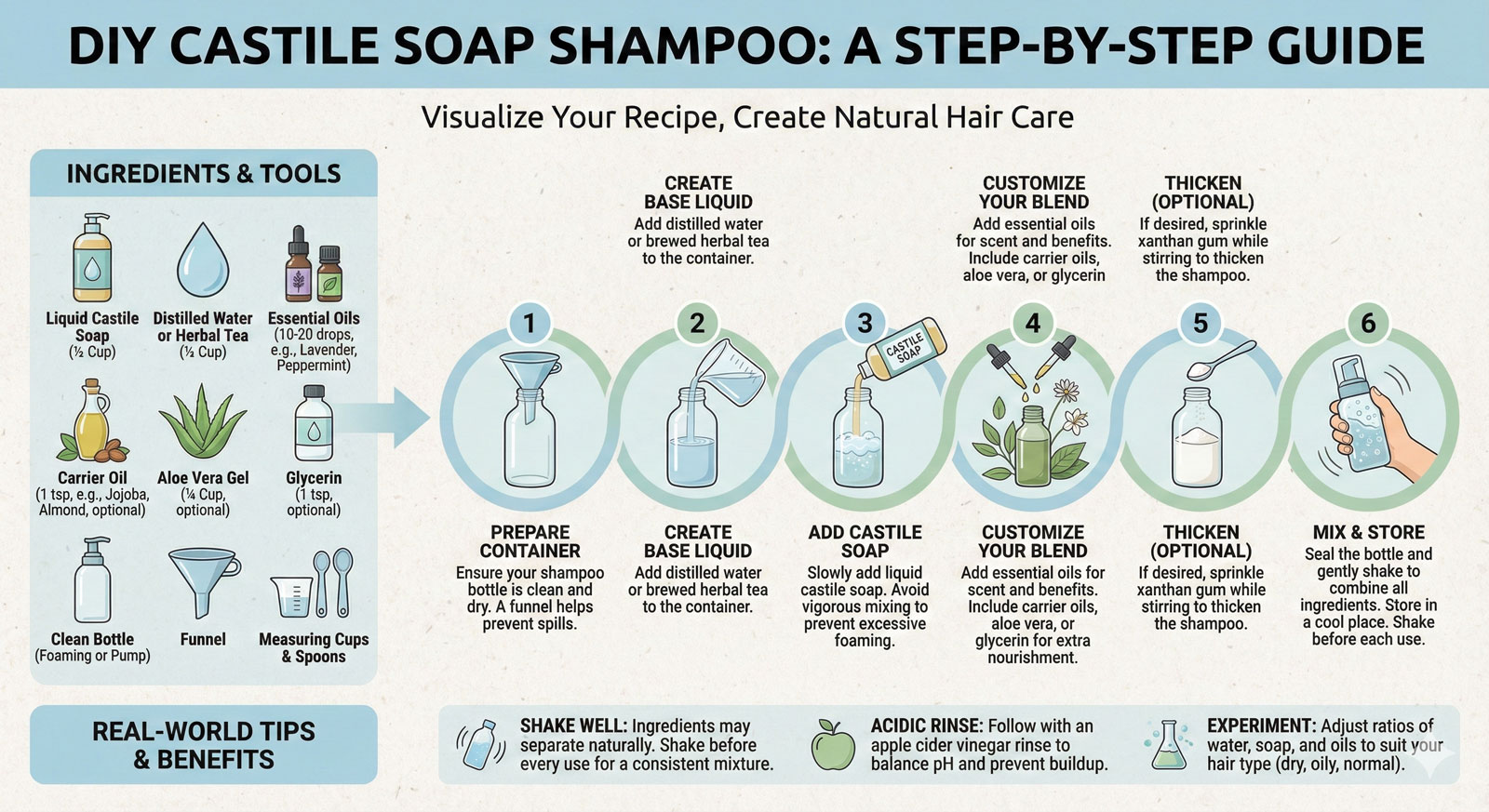
- Proper dilution ratios to prevent hair from feeling stripped or straw-like, typically one part soap to two to four parts liquid
- Selecting and brewing herbal teas as base liquids instead of plain water for added hair benefits
- Balancing essential oil combinations for therapeutic effects without overwhelming sensitive scalps
- Creating acidic conditioning rinses with correct pH to close hair cuticles after washing
- Application technique focusing on scalp massage rather than running soap down hair length
- Thorough rinsing methods to prevent waxy buildup or residue, requiring at least five minutes under running water
- Adjusting formulas based on water hardness in your area, potentially adding baking soda to rinse water
- Managing the transition period when switching from commercial shampoos to natural alternatives
- Preventing separation of oil and water phases through proper mixing or adding natural emulsifiers
- Storage and preservation techniques to maintain freshness within the two-week shelf life
- Customizing recipes for different hair types like oily, dry, color-treated, or curly hair
- Troubleshooting common issues like greasiness, dryness, tangling, or scalp irritation
Skill Level and Time Investment
| Skill Level | Time Investment | Key Milestones |
|---|---|---|
| Beginner | Five minutes to make first batch, two to four weeks for hair transition period, daily use until adjustment complete | Successfully mixing basic recipe, understanding dilution ratios, getting through the awkward transition phase |
| Intermediate | Three to six months experimenting with variations, testing five to ten different recipes | Mastering pH balance with acidic rinses, customizing for personal hair type, troubleshooting hard water issues |
| Advanced | One year plus of consistent use and refinement, developing signature formulas | Creating complex multi-ingredient blends, adapting recipes seasonally, mentoring others through transition |
| Practice Requirements | Minimum two to three batches per week during transition, testing adjustments after each wash | Building intuition for ingredient ratios, recognizing how hair responds to changes |
Advantages and Challenges
Advantages:
- Dramatically lower cost compared to natural commercial shampoos, with one bottle of castile soap yielding multiple batches
- Complete control over ingredients, knowing exactly what touches your scalp and hair
- Elimination of harsh sulfates, parabens, silicones, and synthetic fragrances that irritate sensitive skin
- Environmentally friendly with biodegradable ingredients and reduced plastic waste from reusable bottles
- Versatility of the base castile soap for countless other household and personal care uses
- Therapeutic benefits from customized essential oil blends addressing specific scalp concerns
- Many users report healthier scalp conditions, reduced dandruff, and elimination of itchiness after the transition period
- Hair often becomes softer, shinier, and less dependent on frequent washing once natural oil production balances
Challenges:
- The dreaded transition period lasting two to four weeks where hair may feel greasy, heavy, or excessively dry
- High pH of castile soap requires mandatory acidic rinse step, adding time and complexity to hair washing routine
- Not suitable for color-treated or bleached hair as the alkaline soap strips artificial color faster
- Hard water creates soap scum and waxy buildup requiring filtered or distilled water for best results
- Short shelf life of one to two weeks due to lack of preservatives, requiring frequent small-batch preparation
- Trial and error phase can be frustrating as you discover the right dilution and ingredients for your unique hair
Real Project Applications
The most common application is creating a basic daily shampoo by blending half a cup of liquid castile soap with half a cup of cooled peppermint or chamomile tea, then adding ten to fifteen drops of essential oils. This yields enough shampoo for about one to two weeks of regular use for shoulder-length hair.
I’ve created specialized formulas for different family members based on their hair needs. My daughter with curly hair gets extra jojoba oil and lavender, while my husband with an oily scalp uses a more diluted version with rosemary and tea tree oil.
For those dealing with dandruff or scalp issues, therapeutic shampoos incorporate tea tree oil, thyme, or bergamot essential oils known for their antimicrobial properties. These formulations typically use stronger tea bases like nettle or rosemary tea instead of plain water.
Clarifying treatments for product buildup involve a more concentrated castile soap mixture used once weekly, followed by a longer acidic rinse soak. This application works particularly well for those who use styling products regularly and need a deeper cleanse.
Gift-making has become one of my favorite applications. I create small four-ounce sampler sets with matching acidic rinse bottles, beautifully labeled with custom recipes and instructions. These make thoughtful presents for friends interested in natural living.
Seasonal variations have proven popular in my crafting circle. Summer formulas include cooling peppermint and eucalyptus for refreshing washes after outdoor activities, while winter blends feature warming cedarwood and nourishing oils to combat dry indoor heating effects.
One of my proudest achievements was creating a travel-friendly solid version by mixing castile soap concentrate with xanthan gum and letting it set into a thick paste. It eliminated the worry about liquid restrictions on flights while maintaining all the benefits of my regular formula.
The most rewarding application has been teaching workshops where participants make their first batch together. Watching someone successfully create their own shampoo and seeing their excitement about taking control of their hair care routine never gets old.
The Learning Experience
Most beginners start with high expectations and quickly hit reality during the first week. Your hair will likely feel different, possibly greasy or heavy, as your scalp adjusts to not being stripped of natural oils by harsh detergents. This is completely normal but can test your commitment to the natural approach.
The biggest mistake newcomers make is using too much undiluted soap or skipping the acidic rinse. I learned this the hard way when my hair felt like a tangled bird’s nest after my second attempt. The vinegar rinse isn’t optional—it’s absolutely essential for closing those lifted cuticles.
Never mix the acidic rinse directly into your castile soap shampoo. Acids and bases neutralize each other, leaving you with a useless mixture that won’t clean anything. Always apply them separately with thorough rinsing in between.
The best learning resources include online communities where experienced users share their formulas and troubleshooting tips. Forums dedicated to natural hair care provide invaluable support during the challenging transition period when you’re tempted to give up and return to commercial products.
Book recommendations that helped me immensely include guides on essential oil usage and pH balancing in natural cosmetics. Understanding the science behind why castile soap works the way it does made troubleshooting so much easier.
My personal breakthrough moment came about six weeks into my journey when I finally woke up with hair that felt clean, soft, and manageable. The transition was over, and I realized my scalp no longer itched, my hair had more body, and I could go three days between washes instead of daily washing.
Sound familiar? That moment when you run your fingers through your hair and it just feels right—not coated, not stripped, but genuinely healthy—that’s when you know all the experimentation was worth it.
Comparison with Similar Crafts
| Aspect | Castile Soap Shampoo | Baking Soda Method | Commercial Natural Shampoo |
|---|---|---|---|
| Ease of Learning | Moderate, requires understanding of dilution and pH balance | Very simple but harsh on many hair types | No learning curve, ready to use |
| Material Costs | Low, approximately two to three dollars per batch, castile soap lasts months | Extremely low, pennies per wash | High, fifteen to thirty dollars per bottle |
| Time Investment | Five minutes mixing, two to four week transition period | Two minutes per use, potentially longer difficult transition | None, immediate use |
| Hair Type Versatility | Good for most types with customization, challenging for color-treated hair | Poor, too alkaline for many people | Excellent, formulated for specific hair types |
| Shelf Stability | Limited to one to two weeks without preservatives | Indefinite for dry ingredients | One to two years with preservatives |
| Customization Options | Extensive with essential oils and carrier oils | Limited to essential oil additions | None, fixed formulation |
| Environmental Impact | Excellent, biodegradable and minimal packaging | Excellent, simple ingredients | Variable, depends on brand practices |
Common Questions from Fellow Crafters
Q: Why does my hair feel waxy or greasy even after washing thoroughly with castile soap shampoo?
A: This usually indicates hard water reacting with the soap to create soap scum buildup. Try using distilled or filtered water for both mixing your shampoo and rinsing, or add a teaspoon of baking soda to your rinse water to counteract mineral deposits. Make absolutely certain you’re following with an acidic rinse every single time.
Q: How long does the transition period really last and what should I expect?
A: Most people experience two to four weeks of adjustment, though some lucky individuals transition immediately. Initially your hair may feel greasier as your scalp overproduces oil, then it might swing to feeling dry. Stick with it consistently and resist the temptation to switch back to commercial shampoo mid-transition, as this restarts the whole process.
Q: Can I use castile soap shampoo on color-treated or highlighted hair?
A: Unfortunately, the high pH of castile soap tends to strip artificial color more quickly than pH-balanced shampoos. If you’re committed to trying it with color-treated hair, use a very diluted mixture and expect your color to fade faster than normal.
Ever notice how some people rave about castile soap while others hate it? The difference often comes down to water quality and whether they’re consistently using the acidic rinse—these two factors make or break the entire experience.
Q: What’s the best essential oil combination for promoting hair growth?
A: Research and traditional use suggest rosemary essential oil for stimulating hair follicles, peppermint for improving scalp circulation, and cedarwood for balancing oil production. I typically use five drops rosemary, three drops peppermint, and two drops lavender in my growth-focused formula.
Q: Do I still need to use conditioner after washing with castile soap shampoo?
A: The acidic rinse acts as your conditioner by closing cuticles and restoring pH balance. However, if you have very dry or damaged hair, you might benefit from applying a small amount of coconut oil or jojoba oil to damp ends after washing and rinsing.
Q: How can I make my castile soap shampoo thicker like store-bought products?
A: Add a quarter teaspoon of xanthan gum to your recipe, mixing it thoroughly with the water or tea base before adding the castile soap. This creates a more gel-like consistency that’s easier to apply and feels more like commercial shampoo.
Q: Why does my homemade shampoo separate with oil floating on top?
A: Castile soap isn’t a true emulsifier, so carrier oils naturally separate from the water-based ingredients. Shake vigorously before each use, or reduce the amount of carrier oil to just a few drops. Some crafters add a tiny amount of vegetable glycerin to help with dispersion.
Q: Is it safe to use castile soap shampoo on children?
A: Yes, it’s generally gentler than commercial children’s shampoos, but use a more diluted formula and be extremely careful to keep it out of eyes as it stings. The unscented or mild baby castile soap varieties work best for young children.
My Personal Results and Insights
| Project Type | Outcome |
|---|---|
| Basic Daily Shampoo | Successfully eliminated scalp itchiness within three weeks, reduced washing frequency from daily to every three days, hair texture improved dramatically |
| Dandruff Treatment Formula | Tea tree and rosemary blend reduced flaking by approximately eighty percent after six weeks of consistent use |
| Cost Savings | Reduced hair care spending from approximately thirty dollars monthly to less than five dollars, one bottle of castile soap lasting four months |
| Skill Development | Progressed from basic mixing to creating ten different specialized formulas within six months, now teaching monthly workshops |
| Gift Projects | Created over fifty gift sets for friends and family, received overwhelmingly positive feedback with seventy percent continuing to use natural methods |
| Environmental Impact | Eliminated approximately twelve plastic shampoo bottles annually from household waste, switched entire family to reusable glass containers |
| Hair Health Changes | Noticeably thicker hair growth, elimination of split ends, natural shine returned without silicone products |

Final Thoughts and My Recommendation
After five years of making castile soap shampoo, I can honestly say this craft transformed my relationship with hair care. It’s not perfect for everyone, and I won’t pretend the transition period is easy. Those first few weeks can genuinely test your patience when your hair feels weird and you question every decision.
But here’s what I’ve discovered through extensive experimentation and conversations with dozens of fellow crafters: if you’re willing to commit to the full two to four week transition period without giving up, and you consistently use the acidic rinse after every wash, your chances of success increase dramatically.
This craft works best for people with a moderate level of patience and genuine interest in understanding what they’re putting on their bodies. If you’re someone who just wants to grab a bottle and go, commercial natural shampoos might be a better fit for your lifestyle.
I highly recommend this for anyone dealing with sensitive scalp issues, those committed to reducing chemical exposure, or crafters who enjoy customization and experimentation. The cost savings alone justified my time investment, but the health benefits and environmental impact sealed the deal.
However, approach with realistic expectations if you have color-treated hair, live in an area with extremely hard water, or don’t have time for the extra step of acidic rinsing. These factors don’t make success impossible, but they add complexity that might frustrate beginners.
The most valuable insight I can share is this: your first batch probably won’t be perfect, and that’s completely okay. This craft rewards persistence and adaptation more than following recipes exactly. Pay attention to how your hair responds, adjust accordingly, and don’t be afraid to experiment.
My hair has never been healthier, my scalp issues disappeared, and I’ve saved hundreds of dollars while eliminating dozens of plastic bottles from my waste stream. Those benefits far outweigh the initial awkwardness of learning something new.
Whether you’re a complete beginner or an experienced DIY beauty enthusiast, making shampoo with castile soap offers a rewarding journey into natural hair care. Just remember that success lies not in perfection, but in understanding your unique hair needs and being patient enough to let your scalp rediscover its natural balance. The transition period is temporary, but the benefits of chemical-free, customized hair care last as long as you continue the practice.
For those ready to take the plunge, start with the simplest recipe possible, arm yourself with plenty of apple cider vinegar for that essential acidic rinse, and give your hair the full month it needs to adjust. Trust the process, and you might just find yourself wondering why you didn’t make this switch years ago.







wonderful information