The warmth of a handmade bar of soap in your hands is unlike anything you can buy at a grocery store, but the chemistry involved can be intimidating. I remember staring at a container of caustic lye in my early crafting days, terrified I’d cause a chemical explosion in my kitchen. That fear led me to discover the gentle, artistic world of making soap without handling raw chemicals, a method that changed my creative life.
- My Journey with Natural Soap Making
- What This Craft Really Entails
- Essential Materials and Tools
- Key Techniques and Skills
- Skill Level and Time Investment
- Advantages and Challenges
- Real Project Applications
- The Learning Experience
- Comparison with Similar Crafts
- Common Questions from Fellow Crafters
- My Personal Results and Insights
- Final Thoughts and My Recommendation
My Journey with Natural Soap Making
My first foray into soap making wasn’t driven by a desire to be a chemist, but by a need for personalized gifts that wouldn’t burn my skin. I had sensitive skin and wanted control over the ingredients, yet the thought of donning safety goggles and a respirator to mix lye water felt overwhelming. I discovered the “melt and pour” method, and it felt like a door opening to a secret garden.

What This Craft Really Entails
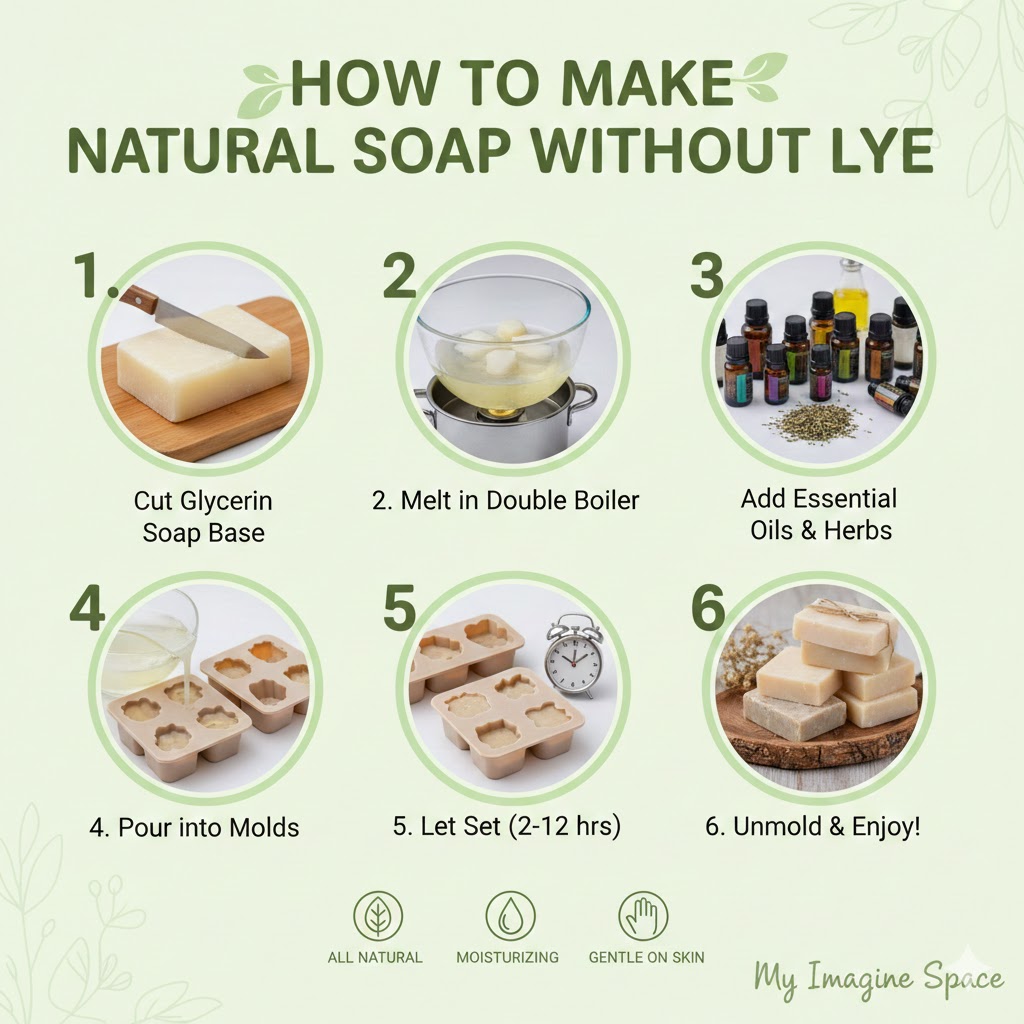
When we talk about making soap “without lye,” we are usually referring to the Melt and Pour (MP) technique. It is vital to understand that all real soap requires lye for the chemical reaction called saponification, but in this craft, that dangerous work has already been done for you. You are starting with a cured, skin-safe base that is ready to be customized.
Think of melt and pour soap making like buying a high-quality plain cake sponge from a bakery; the chemistry of baking is done, and now you get to do the creative work of filling, frosting, and decorating it to your taste.
This craft creates a bridge between simple assembly and complex artistry. It allows you to focus entirely on the therapeutic benefits of essential oils, the aesthetic beauty of color design, and the tactile pleasure of molding shapes. Unlike cold process soap making, which requires precise mathematical calculations and weeks of curing time, this method offers instant gratification.
Have you ever bought a beautiful bar of soap only to find it dried out your skin? This technique puts the power back in your hands, allowing you to choose bases rich in shea butter, goat milk, or olive oil. It is perfect for beginners, impatient crafters, and those of us who want to craft safely with children around.

Essential Materials and Tools
The beauty of this craft lies in its low barrier to entry; you likely have half the tools in your kitchen already. However, designating specific tools for soap making is a best practice I always recommend to keep your cookware food-safe.
| Item Category | Specifications |
|---|---|
| Soap Base | High-quality block (1-2 lbs) of Goat Milk, Shea Butter, or Clear Glycerin base (SLS-free recommended). |
| Molds | Silicone baking molds or specialized soap molds (flexible is key for easy release). |
| Heat-Safe Container | Pyrex glass measuring cup (2-4 cup capacity) with a spout for pouring. |
| Cutting Tool | Straight blade knife or a specialized crinkle cutter for texture. |
| Stirring Utensils | Stainless steel spoons or silicone spatulas (avoid wood as it retains scents). |
| Rubbing Alcohol | 99% Isopropyl alcohol in a fine mist spray bottle (crucial for bubble removal). |
Key Techniques and Skills
While the process sounds simple—melt, mix, pour—mastering the finish requires specific techniques. Here are the skills I’ve honed over years of practice:
- Temperature Control: Learning to melt the base in short bursts to avoid boiling, which causes the soap to become rubbery and sweat later.
- Color Mixing: Pre-mixing powdered colorants like mica with a bit of alcohol before adding them to the base to prevent clumps.
- Fragrance Load: Understanding the correct ratio of essential oils (usually 3% of the total weight) to ensure safety and scent longevity.
- Bubble Elimination: The art of spraying alcohol immediately after pouring to pop surface tension bubbles for a smooth finish.
- Embedding: Suspending dried botanicals or toy figures in clear soap without melting them or having them sink to the bottom.
- Layering: Pouring soap in stages at the right temperatures to create striped designs without the layers separating later.
- Swirling: Manipulating two different colored bases while they are at a specific semi-solid consistency to create marble effects.
- Unmolding: Knowing exactly when the soap is cool enough to release without denting the corners.
Be careful with fresh additives; I once ruined a beautiful batch by adding fresh lavender buds, which turned brown and moldy inside the soap within days.
Skill Level and Time Investment
One of the reasons I champion this craft is its accessibility. You can go from raw materials to a finished gift in a single afternoon.
| Skill Level | Time Investment | Key Milestones |
|---|---|---|
| Beginner | 1 – 2 Hours | Making a solid color bar with scent; mastering the alcohol spray technique. |
| Intermediate | 3 – 4 Hours | Creating layered soaps; using dried herbs effectively; attempting simple swirls. |
| Advanced | 5+ Hours | Detailed painting on soap; embedding complex shapes; formulating custom additive blends. |
Advantages and Challenges
No craft is perfect, and honest expectations are important. Here is what I have found to be the true pros and cons of working with pre-made bases.
I love that this method is entirely safe to do in a small apartment or with kids; there are no toxic fumes, no caustic soda burns, and cleanup is literally washing with soap and water.
- Instant Gratification: The soap is ready to use as soon as it hardens (usually 1-2 hours), unlike cold process which cures for 4-6 weeks.
- Safety: No handling of lye means no risk of chemical burns or need for safety gear.
- Versatility: You can remelt the soap if you make a mistake, reducing waste significantly.
- Scent Clarity: The base doesn’t “eat” fragrances like raw soap batter does, so your expensive essential oils smell truer.
- Artistic Control: The translucent nature of glycerin bases allows for stunning visual effects impossible in opaque cold process soap.
- Consistency: You know exactly how the lather will feel because the base formula is standardized.
- Sweating: In humid climates, the high glycerin content can attract moisture from the air, causing water droplets to form on the bar.
- Ingredient Control: You cannot control the specific oil ratios of the base itself, only what you add to it.
- Heat Sensitivity: These soaps can melt if left in a very hot car or direct summer sun.
- Cost: Buying high-quality pre-made bases is generally more expensive per bar than buying raw oils and lye.
Real Project Applications
The applications for this craft are nearly endless. I often create “spa day” gift sets where I match the scent of the soap to a homemade bath salt soak. One of my favorite recurring projects is making “loofah soaps,” where I slice a natural loofah sponge, place it in a round mold, and pour the soap over it. It creates a built-in scrubber that exfoliates your skin while you wash.
For the holidays, I move away from practical shapes and use intricate silicone molds like snowflakes or pumpkins. I’ve found that using clear glycerin base with a drop of blue coloring and bio-degradable glitter creates an “ice cube” effect that kids absolutely adore. It turns the mundane task of hand-washing into a magical experience for them.
Another practical application is the “travel soap.” I pour the mixture into small, single-use silicone ice cube trays. These tiny soaps are perfect for guests or for taking on trips where you don’t want to carry a wet, full-sized bar back home. Can you imagine the delight of a houseguest finding a fresh, single-use rose-shaped soap on their towel?
The Learning Experience
Learning to work with melt and pour base is generally smooth, but it does have a learning curve regarding temperature. Most beginners, myself included, tend to overheat the base. I learned the hard way that boiling the base breaks down the cellular structure and causes it to lose moisture, resulting in a bar that feels dry and looks shriveled.
Always stir your melting base gently every 30 seconds; this distributes the heat evenly and prevents “hot spots” that can scorch your soap.
My breakthrough moment came when I realized that patience is an ingredient. I used to rush the cooling process by throwing molds in the freezer, which often caused the soap to crack or sweat later. Once I started letting them cool at room temperature, my results became professional quality. There are fantastic communities online, particularly on YouTube, where visual tutorials can help you master swirling techniques.
Comparison with Similar Crafts
To give you a better perspective on where this stands in the fiber and soap arts, here is how it compares to its siblings.
| Aspect | Melt and Pour (This Craft) | Cold Process Soap | Hot Process Soap |
|---|---|---|---|
| Primary Safety Risk | Heat (burns from hot liquid) | Chemical (burns from Lye) | Chemical & Heat (volcanic expansion) |
| Cure Time | Hours (cool down only) | 4 to 6 Weeks | 1 to 2 Weeks |
| Visual Style | Clean, bright, can be clear | Creamy, opaque, rustic | Rustic, textured, “applesauce” look |
| Difficulty | Beginner Friendly | Intermediate/Advanced | Intermediate |
Common Questions from Fellow Crafters
Q: Can I add fresh milk or honey to the melted base?
A: You should be very careful. Adding liquids can throw off the preservative balance of the base. I recommend using powdered goat milk or honey powder instead to prevent spoilage.
Q: Why is my soap “sweating” beads of water?
A: This is called glycerin dew. Glycerin is a humectant that draws moisture from the air. To prevent this, wrap your soaps tightly in plastic wrap immediately after they are fully cool.
Q: Is this considered “natural” soap?
A: It depends entirely on the base you buy. You can purchase 100% natural, organic bases, or you can buy cheap ones full of detergents. Read the ingredient label of your base carefully.
Q: Can I use food coloring to dye my soap?
A: I advise against it. Food coloring often fades quickly or “bleeds” into other colors in the soap. Cosmetic-grade micas or soap dyes are much more stable.
Q: How long does the soap stay good for?
A: If stored correctly in a cool, dry place, the base is usually good for at least a year. However, the scent of essential oils may fade after 6-8 months.
Q: My layers fell apart when I cut the soap. What happened?
A: You likely let the first layer cool too much or didn’t score it. The secret to adhering layers is to spray the bottom layer with alcohol and pour the next layer while it is hot, but not boiling.
My Personal Results and Insights
After years of making these soaps for craft fairs and personal use, I’ve tracked some data that might help you manage expectations.
| Project Type | Outcome |
|---|---|
| Complex Layered Loaves | High visual impact but higher waste due to trimming edges. |
| Single Cavity Molds | Zero waste and perfect for beginners; 100% success rate. |
| Cost Efficiency | Approximately $2.50 – $4.00 per bar depending on essential oils used. |
| Gift Reception | Consistently rated as “favorite gifts” by friends due to customization. |
Have you ever considered how much plastic waste you could save by making your own bars instead of buying liquid soap in bottles?

Final Thoughts and My Recommendation
Making soap without lye is one of the most rewarding entry points into the world of handcrafts. It satisfies the urge to create something beautiful while also producing something immediately useful. I have found it to be a wonderful creative outlet that doesn’t require a dedicated studio space or expensive equipment.
I highly recommend this craft for anyone who wants to dip their toes into soap making without the intimidation factor of chemistry. It is particularly wonderful for parents wanting to craft with older children or for anyone looking for a thoughtful, personalized gift idea. While it may lack the total ingredient control of cold process soap, the safety and artistic freedom it offers make it a worthy pursuit.
Never use fresh food ingredients like fruit purees in melt and pour soap base; they will rot inside the soap and cultivate bacteria.
If you are looking for a weekend project that offers high success rates and genuine utility, this is it. Start with a simple clear base and one essential oil to build your confidence before attempting complex swirls. It might just be the start of a lifelong obsession with bubbling creativity.