There is a profound, quiet magic in standing over a pot of oils and watching them transform into something as essential as soap. My fascination began not with the chemistry, but with the desire to control exactly what touched my family’s skin, moving away from harsh commercial detergents. There is nothing quite like the feeling of lathering up with a bar that you created from scratch, knowing every single drop of oil and grain of salt that went into it.
- My Journey with Making Soap Base
- What This Craft Really Entails
- Essential Materials and Tools
- Key Techniques and Skills
- Skill Level and Time Investment
- Advantages and Challenges
- Real Project Applications
- The Learning Experience
- Comparison with Similar Crafts
- Common Questions from Fellow Crafters
- My Personal Results and Insights
- Final Thoughts and My Recommendation
My Journey with Making Soap Base
I started my journey like many others, buying pre-made melt-and-pour blocks from craft stores. It was fun, but I often felt like I was assembling a kit rather than truly crafting. I wanted to own the process entirely, from the raw oil to the finished base.

I spent months reading old formularies and experimenting with fatty acid profiles. I wasn’t just making soap; I was making the canvas that I would later paint with scents and colors. It was a shift from being a decorator to being an architect.
Chemistry is the craft of the universe, and soap making is where the kitchen meets the laboratory in the most beautiful way.
One early Saturday morning, I finally achieved a crystal-clear molten liquid after hours of cooking. I poured it into a mold, and when it hardened into a perfect, transparent block, I felt a rush of accomplishment that knitting or sewing had never quite given me.
What This Craft Really Entails
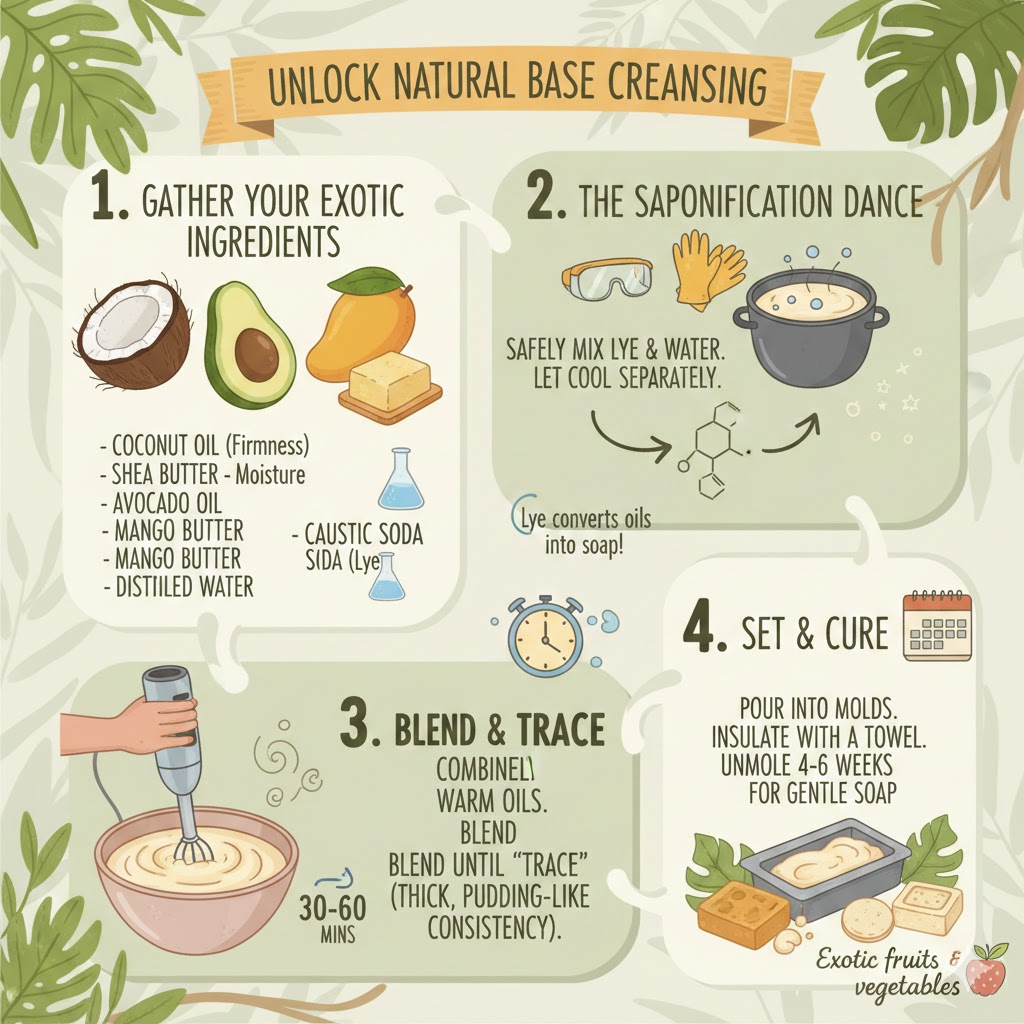
Making your own soap base, specifically a glycerin melt-and-pour style base, is an advanced variation of the hot process soap-making method. While traditional cold process soap is opaque and cures over weeks, making a base requires cooking the soap to force gel phase.
The core of this craft involves “saponification”—the chemical reaction between fats and lye—followed by a solvent phase. You introduce alcohol, glycerin, and sugar water to break down the soap crystals. This allows light to pass through, creating transparency.
Historically, soap was a rough, utilitarian product made from wood ash and tallow. The clear, remeltable base we know today is a relatively modern luxury, born from a better understanding of how solvents interact with soap salts.
The term “Melt and Pour” usually refers to buying the block, but “Making Base” means you are the manufacturer creating that block from raw oils and lye.
This craft is best suited for intermediate to advanced crafters who are comfortable with precision weighing and handling hazardous materials. It requires patience and a strict adherence to safety protocols that other fiber arts do not demand.
Have you ever wondered why commercial soap leaves your skin feeling tight? It’s often because the natural glycerin has been removed. When you make your own base, you retain all that humectant goodness, creating a superior product.
Essential Materials and Tools
| Item Category | Specifications |
|---|---|
| Fats and Oils | Coconut oil (for lather), Palm or Stearic Acid (for hardness), Castor oil (for clarity). |
| Chemicals | Sodium Hydroxide (Lye), Distilled Water, High-proof Alcohol (91% or higher), Liquid Glycerin. |
| Safety Gear | Heavy-duty rubber gloves, wrap-around safety goggles, long sleeves, respirator mask. |
| Hardware | Stainless steel pot (no aluminum), digital scale (0.01g accuracy), stick blender, thermometer. |
| Solvents | Sugar water solution (sorbitol substitute), Propylene glycol (optional for commercial clarity). |
Key Techniques and Skills
- Lye Calculation: Mastering the math (or using a calculator) to ensure there is no unreacted lye left in the batch.
- Temperature Control: Maintaining heat between 160°F and the flash point of your alcohol to prevent fires while ensuring dissolution.
- Solvent Addition: Pouring alcohol and glycerin slowly to dissolve the soap curds without creating excessive foam.
- Clarity Testing: Using the “frozen spoon” technique to check if the soap is transparent before pouring.
- Foam Management: Spraying alcohol to disperse bubbles that form on the surface during the pour.
- Curing the Base: Allowing the large block to lose excess water weight so it becomes hard enough to cut and store.
- pH Testing: verifying the safety of the soap to ensure it is neutral enough for skin contact.
- Batch Sizing: Scaling recipes up or down without breaking the delicate ratio of solvents to fats.
Skill Level and Time Investment
| Skill Level | Time Investment | Key Milestones |
|---|---|---|
| Novice | 3-4 weeks study | Understanding lye safety and reading recipes correctly. |
| Intermediate | 5-10 batches | Achieving a functional soap that cleans, even if cloudy. |
| Advanced | 6+ months practice | Consistently producing crystal-clear, hard, remeltable base. |
Advantages and Challenges
- Total Ingredient Control: You decide exactly what oils are used, avoiding cheap fillers or detergents found in store-bought bases.
- Cost Efficiency: Once you own the equipment, making base in bulk is significantly cheaper than buying pre-made blocks.
- Skin Benefits: The high glycerin content makes this soap incredibly moisturizing and gentle on sensitive skin.
- Creative Freedom: You can tweak the formula to be harder, bubblier, or more conditioning based on your needs.
- Therapeutic Focus: The precision required forces you to be mindful and present, clearing the mind of other worries.
- Sustainability: You can choose palm-free or organic oils to align with your environmental values.
Never add alcohol to the soap pot over an open flame or gas burner, as the fumes are highly flammable and can cause an explosion.
- Safety Risks: Working with lye and hot alcohol carries real risks of chemical burns and fire if you are careless.
- Material Sourcing: Finding high-proof alcohol and quality vegetable glycerin can be difficult or expensive depending on your location.
- Complexity: If the ratio of solvents is off even slightly, the base might remain sticky, soft, or completely opaque.
- Patience Required: Unlike knitting where you can fix a stitch, once the chemical reaction happens, it is often hard to reverse a mistake.
Real Project Applications
One of my favorite applications for homemade base is creating “embed” soaps. Because I can control the clarity, I make a hyper-transparent base for the outer shell and an opaque white base for the internal shapes. For a recent baby shower, I created soaps with tiny white ducks floating inside a clear blue “pond.”
I also use this technique to make specialized facial bars. By adjusting the recipe to use more castor and olive oil, and less coconut oil, I create a base specifically for sensitive facial skin. I once gifted a batch of charcoal and tea tree facial bars to my niece who struggled with acne, and she swore it was better than the expensive pharmacy brands.
Another practical project involves seasonal gifting. I make huge batches of base in the summer, unscented and uncolored. Then, as Christmas approaches, I chop up the base, melt it down, and add cinnamon, orange, and clove. It saves me weeks of curing time during the busy holiday season.
For the best clarity in your final projects, let your poured base sit undisturbed for at least 24 hours to let all micro-bubbles rise to the surface.
The Learning Experience
When you first start, you will likely produce “sweaty” soap. This happens when the glycerin draws moisture from the air. I remember walking into my curing room and seeing my soaps covered in dew droplets—it was heartbreaking.
I learned that this wasn’t a failure of the soap, but a failure of storage. Learning to wrap the soap immediately after curing was a hard-won lesson. Beginners often panic when the mixture separates during the cook.
My breakthrough moment came when I stopped fearing the stick blender. I realized that vigorous mixing was necessary to emulsify the oils and lye before the cook. It’s a lot like making mayonnaise; if you are too timid, it just won’t come together.
Ever wonder why your homemade soap gets cloudy after a few weeks? It is usually due to insufficient solvent or not covering the pot tightly during the cook.
There are wonderful communities online, particularly forums dedicated to soap making chemistry, where people share their “failed” batches. Seeing that even experts get cloudy batches sometimes helped me persevere.

Comparison with Similar Crafts
| Aspect | DIY Soap Base | Store-Bought Base | Cold Process Soap |
|---|---|---|---|
| Prep Time | High (3-4 hours active) | Low (5 minutes) | Medium (1 hour active) |
| Safety Risk | High (Lye + Heat) | None (Just heat) | Medium (Lye) |
| Customization | Unlimited | Add-ins only | High |
| Wait to Use | 24 hours | 1 hour | 4-6 weeks |
Common Questions from Fellow Crafters
Q: Can I use rubbing alcohol from the drugstore?
A: Generally, no. Most drugstore alcohol is 70%, which adds too much water to the recipe. You need 91% or 99% isopropyl alcohol, or high-proof ethanol if legal in your area.
Q: Is lye absolutely necessary?
A: Yes. There is no soap without lye. Soap is chemically defined as the salt resulting from the reaction between an acid (fat) and a base (lye). However, there is no lye left in the finished product.
Q: Why is my soap yellow instead of clear?
A: This usually comes from the oils you chose. Olive oil and unrefined hemp oil will tint the soap. For clear soap, stick to light-colored oils like coconut, castor, and refined lard or tallow.
Q: Can I substitute honey for the sugar water solution?
A: You can, but honey can overheat and scorch due to the high temperature of the cook, turning the soap dark brown. Sugar water is more stable for beginners.
Q: My soap is too soft and won’t harden. What happened?
A: You likely added too much solvent (glycerin or alcohol) or didn’t cook the water out sufficiently. You can try remelting and cooking it longer.
Q: Does this save money compared to buying base?
A: Initially, no, due to buying chemicals and tools. But after your first 10 pounds, the cost per bar drops significantly below retail prices.
My Personal Results and Insights
| Project Type | Outcome |
|---|---|
| Standard Clear Base | High transparency, slightly yellow tint, excellent lather. Cost: $2.50/lb. |
| Goat Milk Base | Creamy, opaque, very moisturizing. Harder to get consistent texture. |
| Shaving Soap Base | High stearic acid content, incredible stable foam, difficult to pour. |
| Scrap Batch | Recycled cloudy experiments. Ugly but cleans perfectly. Zero waste. |
The greatest reward is hearing a friend ask where you bought the soap, and seeing their jaw drop when you say you engineered the formula yourself.
Final Thoughts and My Recommendation
Making your own soap base is not for the casual weekend crafter who wants a quick result. It is a serious undertaking that blurs the line between craft and science. It requires a dedicated workspace, safety gear, and a willingness to fail a few times before you succeed.
However, if you are someone who loves to understand the “why” behind how things work, I highly recommend it. The level of control you gain over the final product is unparalleled. You stop being dependent on manufacturers and start becoming a true artisan.
For beginners, I suggest sticking to buying pre-made base or trying a simple cold process loaf first. Once you are comfortable handling lye and understand trace, then you are ready to tackle the challenge of making your own transparent base. It is a demanding skill, but the feeling of self-sufficiency it provides is worth every hour spent over the stove.
Do not attempt this craft if you have small children or pets running freely in your workspace; the chemicals and temperatures involved are unforgiving.
Ultimately, this craft is about patience and precision. If you have those, you will find it deeply rewarding.