The transition from buying small craft-store bottles to sourcing bulk soap making supplies was a pivotal moment in my creative life. It signifies a shift from curiosity to commitment, where the alchemy of oils and lye becomes a part of your daily rhythm. There is a unique thrill in seeing gallon jugs and large sacks of raw materials, knowing they hold the potential for hundreds of luxurious bars.
- My Journey with Sourcing in Bulk
- What This Craft Really Entails
- Essential Materials and Tools
- Key Techniques and Skills
- Skill Level and Time Investment
- Advantages and Challenges
- Real Project Applications
- The Learning Experience
- Comparison with Similar Crafts
- Common Questions from Fellow Crafters
- My Personal Results and Insights
- Final Thoughts and My Recommendation
My Journey with Sourcing in Bulk
I still remember the day the delivery truck pulled up with my first “real” order. Before that, I was purchasing 16-ounce bottles of olive oil from the grocery store and paying a premium for small bags of sodium hydroxide. The driver unloaded a fifty-pound bucket of coconut oil and a massive drum of palm oil right onto my driveway.
My neighbors probably thought I was opening a fry shop, but I was ecstatic. Moving to bulk supplies wasn’t just about saving money; it was about ensuring consistency in my recipes and having the freedom to experiment without fear of running out of ingredients mid-batch. It forced me to get organized and treat my craft with the professional respect it deserved.
“Soap making is 50% chemistry, 40% artistic vision, and 10% heavy lifting and inventory management.”
What This Craft Really Entails
Sourcing and managing bulk soap supplies is a distinct skill set separate from the actual act of making soap. It involves understanding supply chains, managing inventory shelf life, and mastering the logistics of storage. When we talk about bulk supplies, we are usually referring to the primary carrier oils, butters, lye, and fragrances used in Cold Process or Hot Process soap making.

Mastering bulk supply management is best suited for intermediate to advanced soap makers. If you are still testing whether you enjoy the process, sticking to small kits is wiser. However, once you are biting the bullet and making batches larger than two pounds regularly, bulk buying becomes a necessity rather than a luxury.

Have you ever calculated exactly how much that single bar of soap costs to produce? Managing bulk supplies is essentially a lesson in economics and chemistry combined. You must understand the saponification values of your oils and how to store them so they don’t go rancid before you can use them.
How much space are you willing to dedicate to climate-controlled storage for oils that might not be used for six months?
Essential Materials and Tools
When moving to bulk production, your equipment needs to scale up alongside your raw materials. You can no longer rely on kitchen spoons and glass measuring cups.
| Item Category | Specifications |
|---|---|
| Base Oils | 5-gallon buckets or 50lb drums (Coconut, Palm, Olive, Rice Bran) |
| Alkali (Lye) | Food-grade Sodium Hydroxide (NaOH) in 2lb to 50lb containers |
| Measuring Tools | Heavy-duty digital shipping scales (high capacity) and large pitchers |
| Mixing Vessels | Stainless steel pots (8+ quarts) or HDPE buckets for lye solution |
| Safety Gear | Nitrile gloves (box of 100+), full-face shield, apron |
| Molds | Large wooden slab molds or silicone loaf molds (multiple) |
Key Techniques and Skills
Handling large quantities of raw materials requires specific techniques to ensure safety and product quality. Here are the core skills you need to develop:
- Inventory Rotation: Using the “First In, First Out” (FIFO) method to ensure older oils are used before they oxidize.
- Masterbatching Lye: Premixing a large concentration of lye solution to cool down for multiple future batches.
- Masterbatching Oils: Pre-weighing and melting your oil blend in large buckets to speed up production days.
- Bulk Decanting: Safely transferring heavy liquids from 50lb drums into manageable daily-use containers.
- Storage Safety: Keeping reactive chemicals like lye in airtight, clearly labeled containers away from moisture.
- Cost Accounting: Accurately calculating the cost per ounce including shipping (which is often heavy).
- Fragrance Testing: Buying sample sizes to test for acceleration or ricing before committing to a 1lb or 5lb jug.
- Quality Control: Checking incoming shipments for leakage, correct documentation (COA), and freshness.
It is similar to running a commercial kitchen; prep work is everything. If your bulk oils are organized and your masterbatches are ready, the actual soap making becomes a fluid dance rather than a chaotic scramble.
Always store your bulk sodium hydroxide in a locked area or high shelf away from children and pets, as it is highly caustic.
Skill Level and Time Investment
Transitioning to bulk supplies changes the rhythm of your crafting time. You spend less time shopping and more time prepping.
| Skill Level | Time Investment | Key Milestones |
|---|---|---|
| Beginner (Sourcing) | 10+ hours research | Identifying reliable suppliers and understanding shipping zones. |
| Intermediate (Prep) | 2-3 hours per month | Masterbatching oils and lye solution for the month’s projects. |
| Advanced (Management) | Ongoing weekly | Managing inventory flow, tracking batch codes, and seasonal ordering. |
Advantages and Challenges
There are distinct highs and lows when you decide to fill your garage or studio with supplies. Here is what I have gathered from years of practice and community discussions.
- Cost Efficiency: The price per ounce drops dramatically when buying by the gallon or pail.
- Consistency: Using oils from the same lot number ensures your soap feels the same from batch to batch.
- Preparedness: You can whip up a gift or an order at a moment’s notice without running to the store.
- Customization: Bulk buying allows you to create unique house blends that set you apart from kit users.
- Eco-Friendly: One large drum uses significantly less plastic packaging than fifty small bottles.
- Professionalism: It shifts your mindset from “playing” to “producing,” which improves your technique.
However, it is not always smooth sailing. Here are the hurdles you will likely face:
- Storage Space: You need a cool, dark, dry place to store heavy buckets and dangerous chemicals.
- Upfront Cost: Dropping several hundred dollars on a single order can be intimidating for a hobbyist.
- Rancidity Risk: If you don’t soap fast enough, bulk oils can go bad, wasting a huge amount of money.
- Heavy Lifting: Physically moving 35-50lb buckets requires strength or proper equipment like dollies.
Shipping costs for bulk oils can sometimes equal the cost of the product itself, so always calculate the “landed cost.”
Real Project Applications
Buying in bulk opens the door to projects that simply aren’t feasible when purchasing retail ingredients. One year, I decided to make soap favors for my cousin’s wedding. She needed 150 bars of lavender-scented soap. If I had purchased ingredients at a craft store, the cost would have been astronomical.
Because I had a 35lb bucket of olive oil and a large jug of coconut oil on hand, I was able to masterbatch the oils and produce the entire order in one weekend. The consistency was perfect across all 150 bars because they came from the same oil drums. I used a slab mold that holds about 20 pounds of soap at once, which is a tool you only really justify when you have bulk supplies.
Another application is seasonal markets. Preparing for the holiday season requires starting in August or September due to cure times. Having bulk supplies allows you to make fifty Pumpkin Spice bars and fifty Peppermint bars without waiting for shipping in between. It streamlines your workflow into a production line rather than a hobby session.
To extend shelf life, add Vitamin E (Tocopherol) or Rosemary Oleoresin Extract (ROE) to your bulk oil buckets immediately upon opening.
The Learning Experience
Learning to manage bulk supplies is a trial by fire. Most beginners, myself included, make the mistake of buying everything in bulk too soon. I once bought a huge jug of “Cucumber Melon” fragrance oil because it was on sale, only to realize I absolutely hated the scent once it was in the soap.
I was stuck with a quart of fragrance I couldn’t use. The lesson? Always buy a 1-ounce sample first. Another common learning curve is dealing with crystallization in large buckets. Palm oil and coconut oil will solidify in cooler temperatures, and trying to melt down a 50lb bucket without a bucket warmer is a nightmare I don’t wish on anyone.
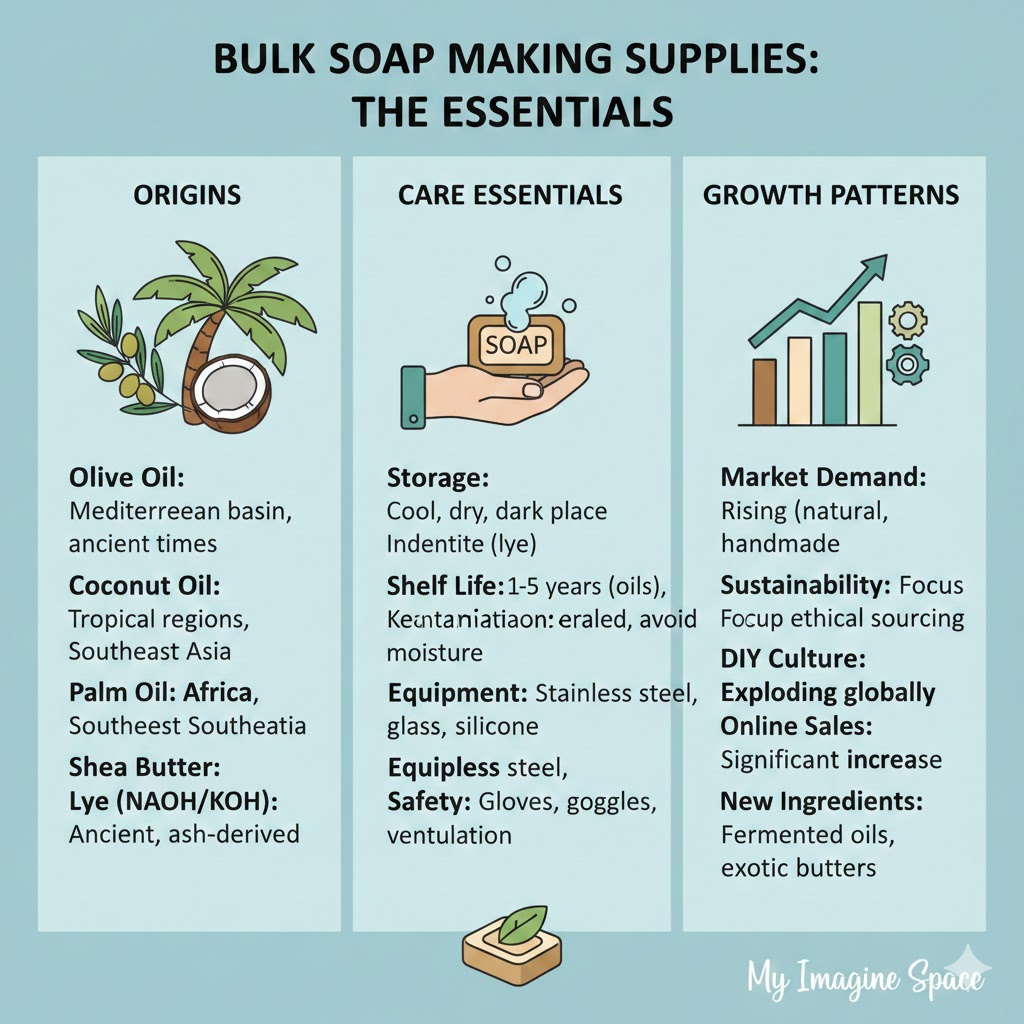
The community is incredibly helpful here. Forums like the Soap Making Forum or Facebook groups for chandlers and soapers are goldmines for supplier reviews. We often share information about which supplier has the fastest shipping or who is currently selling oil that is close to its expiration date.
My breakthrough moment came when I stopped fearing the math. Once I created a spreadsheet to track the cost per gram of every ingredient, I realized that my “expensive” hobby was actually paying for itself.
Essential oils are natural extracts from plants, while fragrance oils are synthetic; bulk pricing varies wildly between the two.
Comparison with Similar Crafts
How does managing soap supplies compare to other material-heavy crafts? It is heavier and messier.
| Aspect | Soap Making | Candle Making | Pottery |
|---|---|---|---|
| Material Weight | Very Heavy (Liquids) | Heavy (Wax slabs) | Very Heavy (Clay) |
| Expiration Risk | High (Oils go rancid) | Low (Wax is stable) | None (Clay dries out) |
| Storage Needs | Climate Controlled | Temperature Stable | Moisture Controlled |
| Chemical Safety | High (Caustic Lye) | Moderate (Fire risk) | Low (Dust risk) |
Common Questions from Fellow Crafters
Q: Does it really save money to buy lye in bulk if I pay for hazardous material shipping?
A: Yes, usually. Even with the hazmat fee, buying 20lbs of lye is significantly cheaper per pound than buying 1lb bottles, but you need to order enough to offset that flat fee.
Q: How do I get the oil out of a 5-gallon bucket without making a mess?
A: Invest in a bucket pump or a spigot if the oil is liquid. For solid oils like coconut, you might need a heavy-duty scoop or a pail heater to melt it slightly.
Q: What is the shelf life of bulk olive oil?
A: Generally about 1-2 years if stored in a cool, dark place. Always write the date of arrival and the expiration date on the bucket with a permanent marker.
Q: Can I share a bulk order with a friend?
A: Absolutely. “Group buys” are very common in local soaping guilds. It splits the shipping cost and allows you to get fresh oils without storing massive amounts.
Q: Is “food grade” necessary for soap?
A: It is preferred. Food grade guarantees purity. “Cosmetic grade” is often fine, but ensure it hasn’t been adulterated with cheaper fillers.
Q: Do fragrance oils expire?
A: They can. Citrus scents can oxidize and lose their smell within a year, while heavy base notes like patchouli can last for years and even improve.

My Personal Results and Insights
Tracking my transition to bulk purchasing revealed some interesting data regarding my production efficiency and costs.
| Metric | Outcome |
|---|---|
| Cost Per Bar | Decreased by approximately 40% |
| Production Time | Batches take 30% less time due to masterbatching |
| Waste | Reduced plastic waste by 75% (fewer bottles) |
| Project Failure | Reduced significantly due to consistent ingredients |
Be careful not to over-order “trendy” ingredients like exotic butters; stick to buying your core oils in bulk and specialty items in small quantities.
Final Thoughts and My Recommendation
Embarking on the journey of buying bulk soap making supplies is a commitment that transforms you from a casual crafter into a serious artisan. It requires space, a bit of money upfront, and a willingness to manage inventory like a business owner. However, the freedom it gives you is unparalleled. Being able to walk into your studio and pour a batch of soap whenever inspiration strikes, without worrying if you have enough olive oil, is incredibly liberating.
I highly recommend moving to bulk for the “Holy Trinity” of oils—Coconut, Palm (or Lard/Tallow), and Olive—once you are making soap at least twice a month. If you are making soap less than once a month, stick to smaller suppliers to avoid rancid oils. The initial investment pays off in the quality of your work and the satisfaction of the process.
Do not feel pressured to buy everything in 50-pound drums immediately. Start with gallon sizes, see how fast you go through them, and scale up naturally. Soap making is a marathon, not a sprint, and building your supply library is part of the beautiful, messy, fragrant journey.